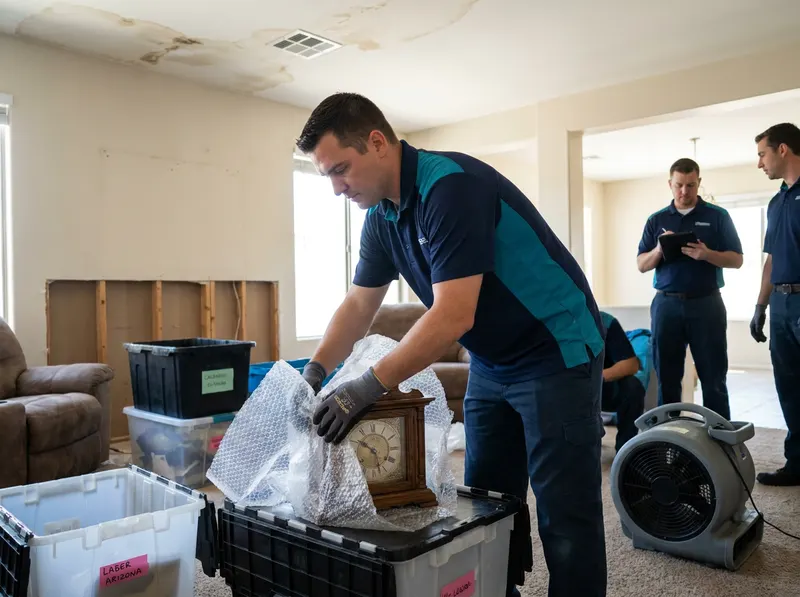
How fast can a crew respond to water damage in Gilbert?
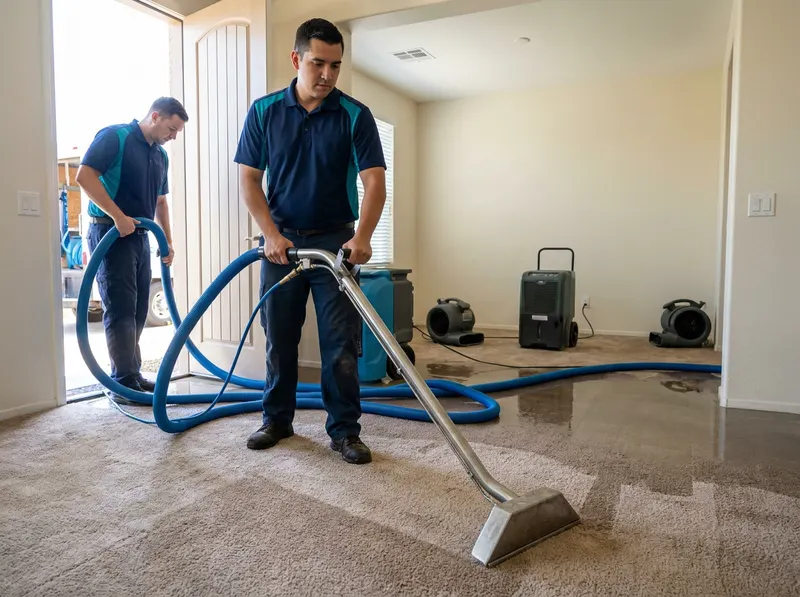
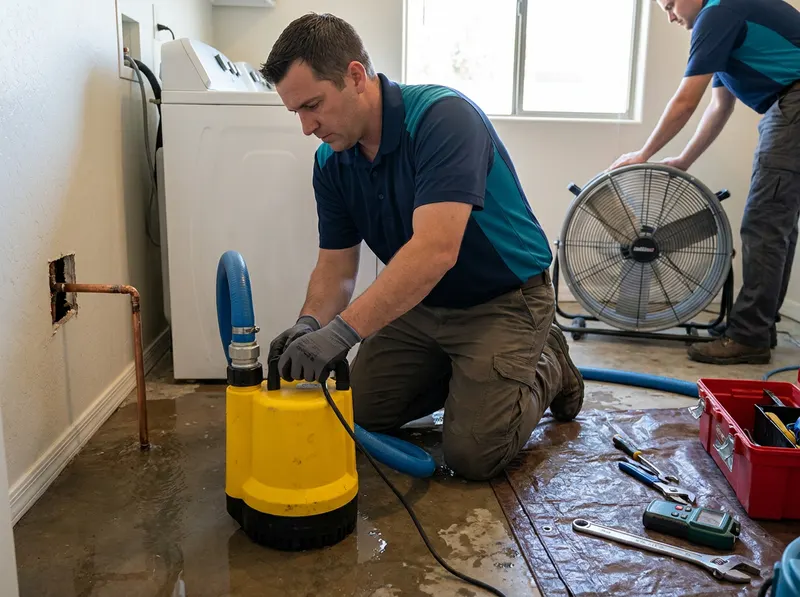
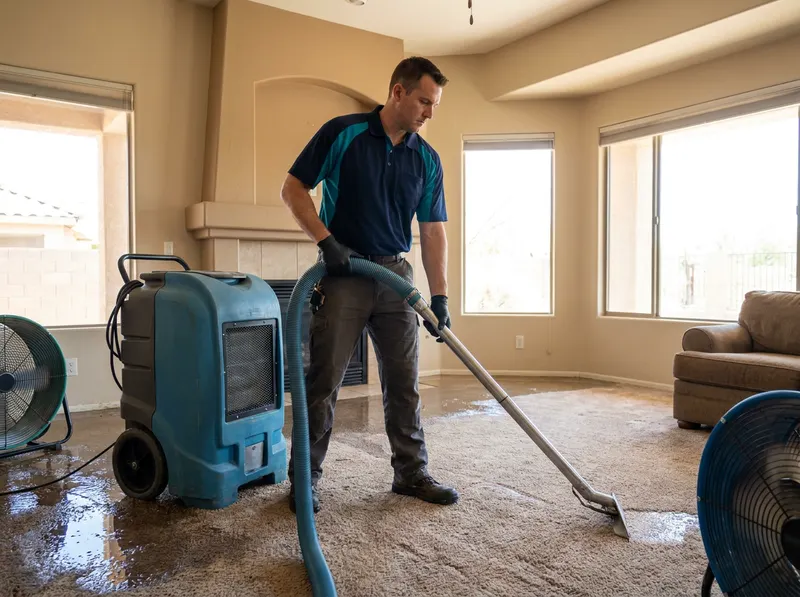
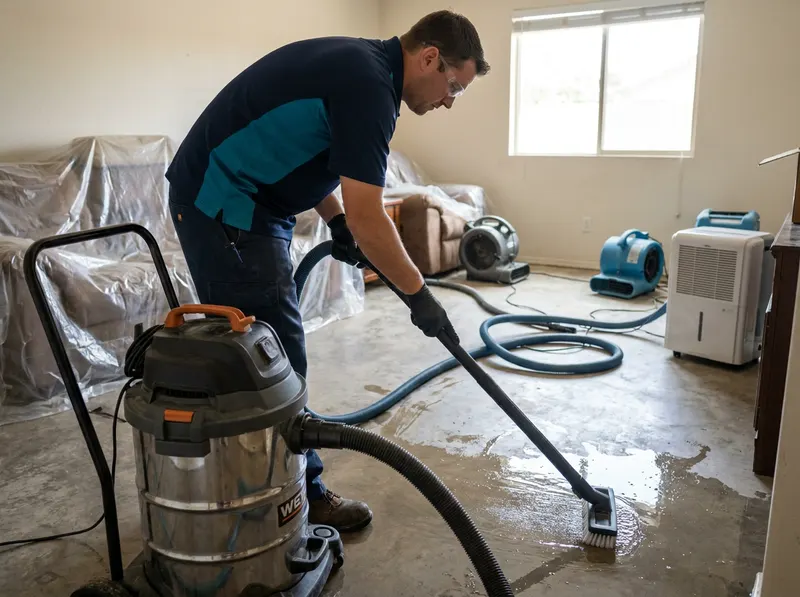
A 24/7 crew reaches most Gilbert addresses within 60 to 90 minutes of a call. Extraction should begin within 24 to 48 hours of a water loss, because mold can start growing on wet drywall and framing after roughly 48 hours.
Does homeowners insurance cover water damage restoration in Gilbert?
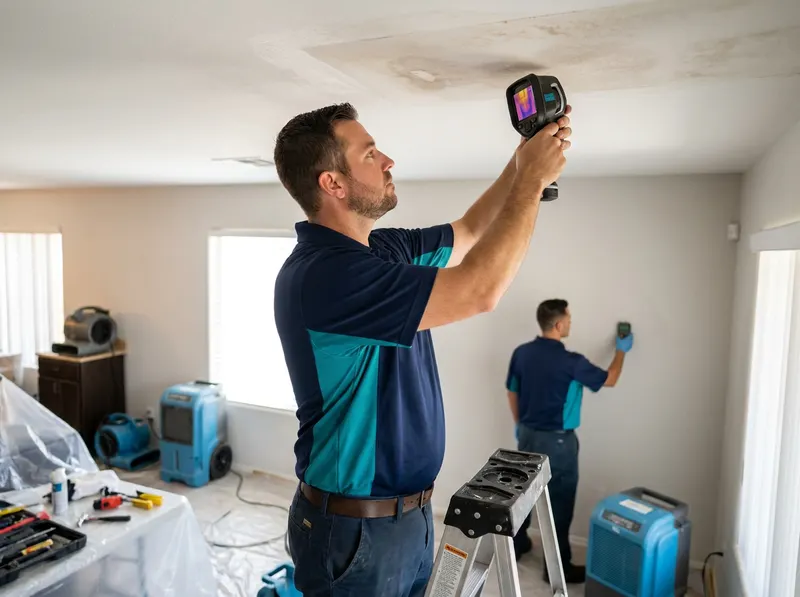
Most Gilbert homeowner policies cover sudden and accidental water damage, a burst pipe, ruptured water heater, or overflowing appliance. Gradual leaks and unaddressed maintenance issues are commonly excluded. The restoration crew documents the loss with photos and moisture readings and bills the insurer directly once a work authorization is signed.
How much does water damage restoration cost in Gilbert?
A standard Gilbert water damage job runs about $1,200 to $5,500, while category-3 sewage losses or whole-floor floods can reach $8,000 or more. The on-site inspection is free, and the written price is confirmed after that visit, a phone quote cannot account for how far water traveled inside walls and under flooring.
What areas of Gilbert are served?
Service covers all of Gilbert, including Val Vista Lakes, Power Ranch, Seville, Morrison Ranch, Agritopia, Layton Lakes, Cooley Station, and the 85233, 85234, 85295, 85296, and 85297 zip codes. Neighboring Chandler, Queen Creek, and Higley addresses are also within the East Valley service range.
How long does it take to dry out a flooded room in Gilbert?
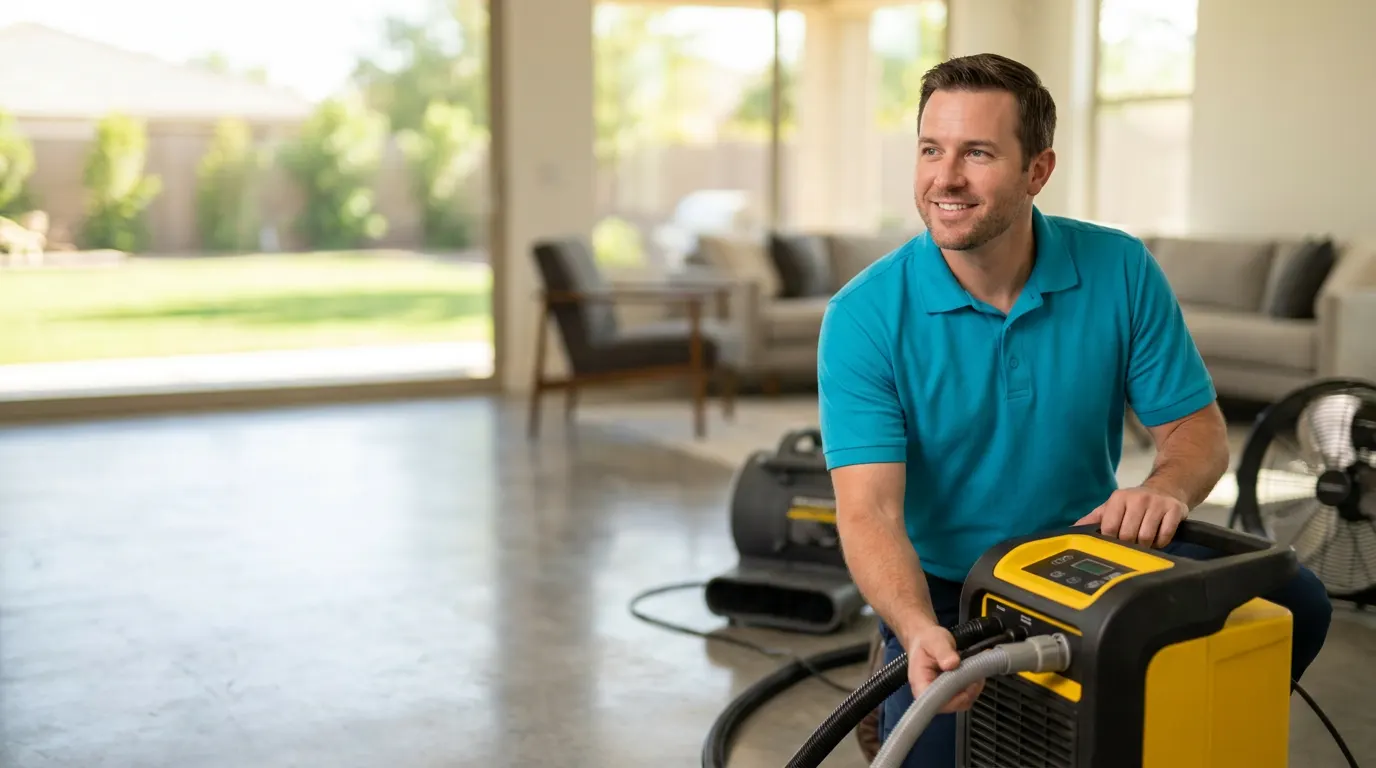
Structural drying in a Gilbert home takes three to five days on average for clean-water damage. A 1,500-square-foot affected area typically runs 6 to 10 air movers and one to two commercial dehumidifiers around the clock, and equipment stays in place until a moisture meter confirms the framing and drywall have reached the dry standard.
What is the difference between category 1, 2, and 3 water damage in Gilbert?
Category 1 is clean water from a supply line, water heater, or faucet and is the most common loss in Gilbert homes; it can often be dried in place. Category 2 (gray water) comes from appliances like dishwashers and washing machines and carries some contamination. Category 3 (black water) is sewage, toilet backups, or monsoon groundwater and always requires removal and disposal of porous materials plus antimicrobial treatment, never drying in place.
Should I file an insurance claim for water damage in Gilbert or pay out of pocket?
For a small clean-water loss under a Gilbert deductible, many owners pay out of pocket to avoid a claim on record; a $1,200 single-room dry-out against a $1,000 deductible often is not worth filing. For losses in the $3,000 to $8,000 range, a claim usually makes sense. The free on-site inspection gives a written scope first, so the decision is made against a real number rather than a guess.
Can water damage be dried without tearing out drywall in a Gilbert home?
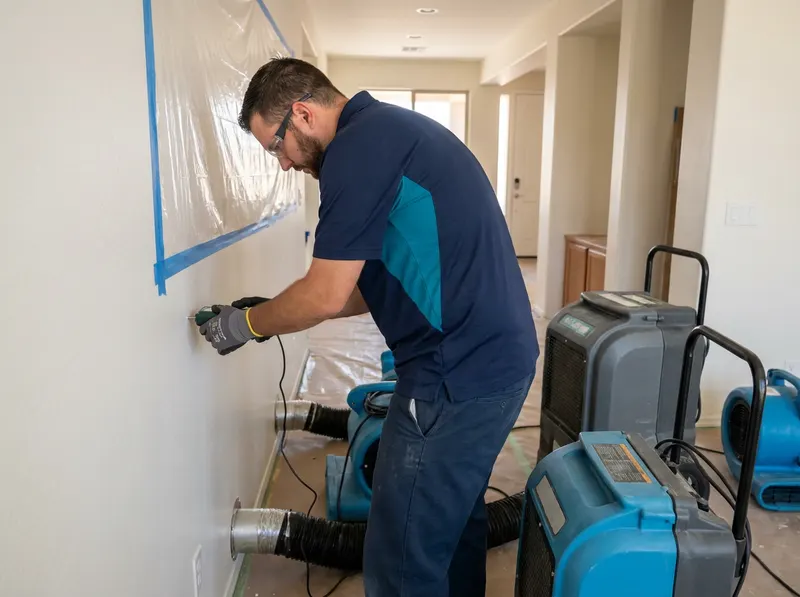
Yes, when the water is clean and caught quickly, drywall is often saved by drying the wall cavity in place with air movers and directed airflow over three to five days. If water sat overnight, wicked more than a few inches up the wall, or came from a category-3 source, the bottom 12 to 24 inches of drywall is cut out so the cavity can dry, since trapped moisture behind intact drywall feeds mold.
What happens to wet carpet and pad after a flood in Gilbert?
Carpet pad acts like a sponge and is almost always removed and thrown out after a soaking, at roughly $1 to $2 per square foot for removal and disposal. Carpet itself can sometimes be lifted, cleaned, and re-laid over new pad if the water was clean and caught fast; carpet touched by category-2 or category-3 water is removed with the pad because it cannot be reliably disinfected.
Do you handle monsoon flood cleanup in Gilbert?
Yes, monsoon and storm flood cleanup is a common Gilbert service from July through September, when runoff pushes past garage doors and low patio thresholds. Because storm water carries soil and bacteria, it is treated as category 2 or 3, which means antimicrobial application and removal of porous materials it touched rather than drying them in place.
How is mold from water damage removed in a Gilbert home?
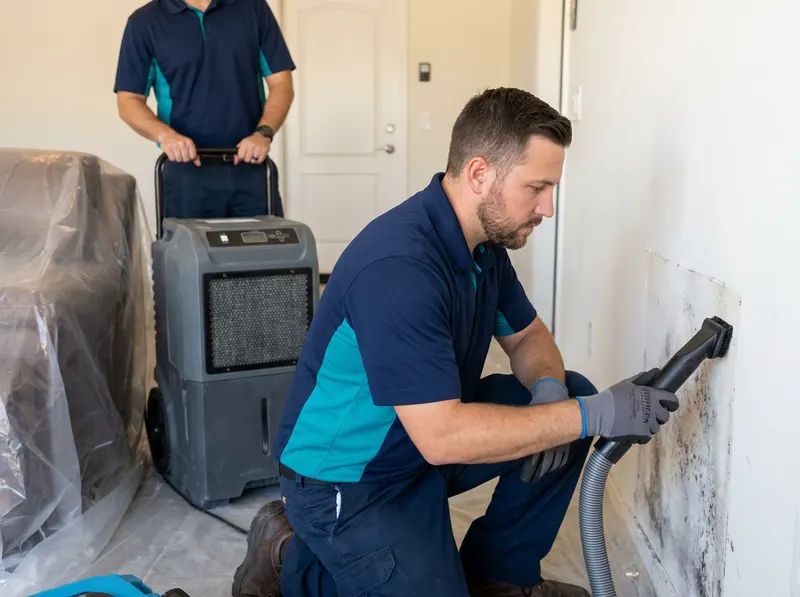
Mold that develops after water sits longer than 24 to 48 hours is removed under negative-air containment, with plastic sheeting sealing the room and a HEPA air scrubber pulling the space under negative pressure so spores exhaust outside instead of spreading through the ducts. Affected porous materials are removed, non-porous surfaces are HEPA-vacuumed and wiped, and the source moisture is dried out first so the mold does not return.
Can I text a photo of the water damage for a Gilbert quote?
Yes, a photo helps size the response before a crew arrives, though the written price is still confirmed at the free on-site inspection because a phone or photo estimate cannot show how far water traveled inside walls or under flooring. Call 480.309.2524 or text a photo of the affected area to start.